The shoes you wear can greatly impact your playing ability on the field. Baseball and soccer are two completely different games, and the differences in the shoes are evident. For those seeking comfort and optimal performance in their sport, it’s essential to grasp the distinction between Soccer Cleats vs Baseball Cleats.
The difference in the sports is that the movements are different, as well as the surfaces. Both are demanding speed, agility and stability. Soccer players will need lightweight soccer shoes with rapid pivoting capabilities, while baseball players will need cleats that can provide quick sprinting and sliding. The wrong cleats can also negatively affect performance and risk of injury.
What Are Soccer Cleats vs Baseball Cleats Designed For
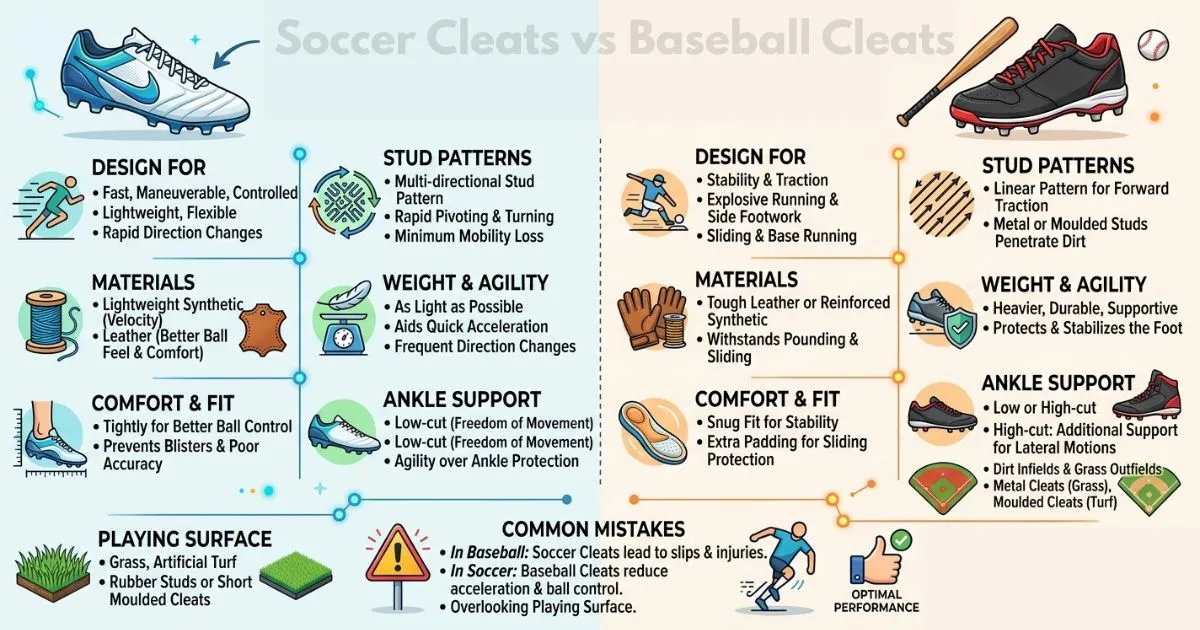
Soccer cleats are designed to be fast, manoeuvrable and controlled. They are lightweight, flexible and can change direction rapidly. Designed to give maximum grip on grass and artificial turf, with minimum mobility loss.
When it comes to baseball, cleats are all about stability and traction. These are meant to accommodate explosive running, side footwork and sliding. The metal or moulded studs penetrate the dirt and grass to provide players with traction on the infield and outfield.
Stud Patterns in Soccer Cleats vs Baseball Cleats
Any stud patterns directly influence the performance. The cleats of soccer shoes feature a multi-directional stud pattern that permits rapid pivoting and turning without sliding. Baseball shoes have a more linear pattern for forward traction on the basepaths.
Surface type will also influence the type of stud used. Rubber studs are used for soccer or grass, and baseball cleats commonly have metal studs to dig into dirt. RIGHT TRACTION = CONTROL AND LESS INJURY RISK.
Material Differences in Soccer & Baseball Cleats
Soccer cleats are usually made of lightweight synthetic materials which are made for velocity and flexibility. Many of the higher-quality models feature leather for better ball feel and comfort. These materials enable the foot to move freely and react quickly.
Baseball shoes use tough leather or reinforced synthetic materials that can hold up to the repetitive pounding and sliding of the game. The materials can help to keep the foot intact and prolong the life of the cleat. When selecting cleats, it is important to choose the correct material to ensure performance and durability.
Weight and Agility in Soccer & Baseball Cleats
The shoes are designed for soccer to be as light as possible. This will aid quick acceleration, frequent direction changes and agility. Players are able to run longer without getting tired and still have control over the ball.
Baseball cleats are heavier, but more durable and supportive. This extra weight protects and helps to stabilise the foot when pivoting, base running, and in the field, for safety and performance, when it matters.
Comfort and Fit in Soccer Cleats & Baseball Cleats
Comfort is essential to both sports. Fitting soccer cleats tightly will provide better control of the ball. A loose fit may result in blisters or poor accuracy when passing or shooting.
A snug fit is necessary for stability, and extra padding to cushion slides during the game. A correct fit will help to prevent ankle injuries and foot fatigue, and help players stay on the pitch for longer.
Ankle Support in Cleats
There are different types of cleats with different ankle support. Soccer shoes can be low-cut to provide freedom of movement. This helps with agility but doesn’t offer much in the way of ankle protection.
Baseball shoes can be either low or high cut. High-cut versions offer additional support at the bottom of the foot to help when sliding and quick lateral motions are necessary. The proper cut is for different positions and playing styles.
Durability of Soccer Cleats & Baseball Cleats
Soccer cleats are made of lightweight and flexible materials because they are used on turf and grass. Regular cleaning and drying extend the life of these. Softening the leather cleats may be necessary.
Baseball cleats experience greater stresses due to slides and sudden stops. Rust and wear are to be checked for metal studs. You can keep your cleats in good shape to have a great performance and avoid injuries from worn shoes.
Choosing Cleats Based on Playing Surface
Soccer players have to make a choice regarding grass, man-made turf or an indoor surface. The shoes used for soccer on turf are rubber-soled, and the soccer shoes used for playing soccer outside can have longer rubber studs for playing on soft ground. Choosing the incorrect cleat will take away traction and agility.
Baseball cleats are for use on dirt infields and grass outfields. Gripping feet are available as metal cleats or in moulded cleats (for synthetic turf). Matching cleats to the surface is essential for optimum performance.
Common Mistakes in Choosing Soccer Cleats vs Baseball Cleats
The problem many players have is that they don’t use the correct shoes for the sport in their shoes. In baseball, soccer cleats can lead to slips and injuries and baseball cleats in soccer can reduce acceleration and ball control.
The second error is overlooking the playing surface. Soccer cleats on grass and metal baseball cleats on artificial turf can decrease traction and game ability. Always wear cleats that are appropriate for your sport and field.
Price and Performance of Soccer & Baseball Cleats
Soccer cleats come in a range of prices and are dependent on the materials used and the brand. Premium cleats provide a superior touch, comfort and performance. Midsize cleats, however, might work for lesser competitive players.
The cost of baseball cleats also varies. Metal cleats tend to cost more money due to their durability and material. The money invested in proper cleats is worthwhile, as they help prevent injuries and improve performance.
Tips for Selecting Cleats
Wear the socks used during games to try on cleats. Look for any tightness in the heel and toes. Fit is important for stability and to avoid blisters.
Experiment with various types and materials of studs. Take into account the type of sport, the surface and your foot type. The right cleat will enhance the athlete’s performance and comfort.
FAQ’s
Can I wear soccer cleats for baseball?
No, soccer cleats do not provide the stability or traction needed for sliding on dirt infields.
Are metal studs necessary for baseball?
Metal studs are ideal for dirt infields, offering traction and reducing the risk of slipping.
What materials are best for Soccer Cleats vs Baseball Cleats?
Synthetic materials offer lightweight flexibility, while leather cleats provide comfort and ball control.
How should cleats fit?
They should be snug but allow slight toe movement. Proper fit prevents blisters and improves performance.
Can I use baseball cleats on artificial turf?
Moulded cleats are preferred for turf; metal cleats can damage surfaces and reduce traction.
Conclusion
To sum up, the knowledge of soccer cleats vs baseball cleats is crucial for any athlete. Soccer cleats are designed for speed, flexibility and ball control; baseball cleats are designed for stability, durability and base running/sliding.
Choosing the right cleats can make them comfortable, perform well and prevent injury. When choosing, take into account things such as pattern, material, weight, fit and playing surface. Taking a little time to select the right cleats can help you to enjoy the game and perform at your peak.