Soccer is more than just a game; it’s a worldwide passion that brings people together from all across the globe. Playing surfaces have changed greatly in recent years and will be discussed. In recent years, there have been a lot of changes in how the playing surfaces are laid out, and the effects these changes have had on the game will be discussed. One of these innovations is soccer turf, which has become a groundbreaking solution in the world of sports. Soccer Pitch stands out as one of these breakthrough innovations, providing a safe, durable, and consistent playing surface for soccer enthusiasts. Football turf offers unparalleled versatility, whether used for professional games, neighborhood fields, or backyard use.
Global demand for high-quality soccer pitches is on the rise. Whether in a recreational field or a stadium where international games are played, the advantages of artificial and hybrid turf systems are changing the way soccer is played, maintained, and experienced.
Understanding Soccer Turf
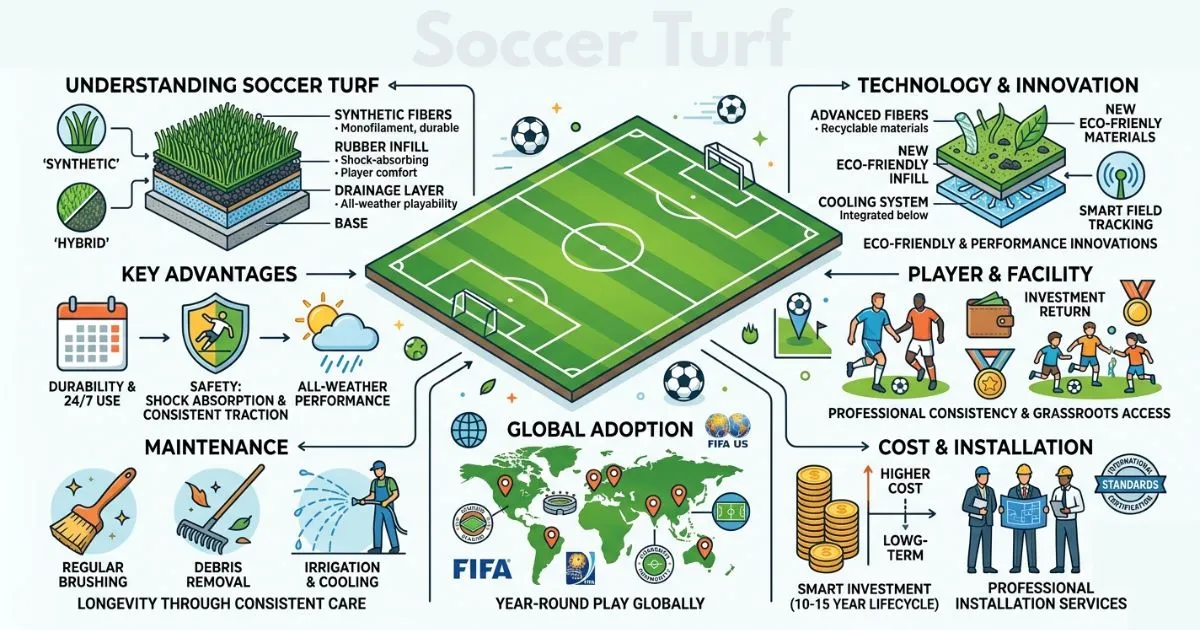
Soccer turf is essentially a specially engineered surface that provides a natural grass look and feel, yet is far more durable than natural grass. Turf does not deteriorate rapidly when subjected to heavy use by people, as in a traditional field. Current models use synthetic fibers, rubber infill, and drainage elements to provide a playing surface that is suitable in all weather conditions.
There are several different types of Football turf, including fully synthetic and hybrid. Hybrid fields combine the natural grass with a synthetic reinforcement, giving the appearance of a natural grass field but with a higher level of resilience. Coaches, athletes, and facility managers must be familiar with these options to ensure they have the proper surface for performance and longevity.
Advantages of Soccer Turf
The benefits of soccer turf installation are not only practical but also strategic. Durability is the first thing that comes to mind. A soccer pitch can take constant use, unlike natural grass, which must be watered, mowed, and repaired regularly. Teams can book several matches and training sessions to allow for the surface to be used without any concerns of damage.
Another critical benefit is safety. Quality turf is engineered to minimise the risks of injuries. Consistent traction reduces slippage, and shock-absorbing layers take care of shocks. Also, Football turf helps to eliminate the muddy or uneven areas that may be found on natural fields that aren’t properly maintained. This allows for a consistent playing field and provides athletes with a playing environment in which they can learn to perform.
Choosing the Right Football Turf
There are several factors that need to be taken into account during the selection process for Football turf. Factors of usage frequency need to be taken into account: High traffic areas need tougher surfaces with denser fibers. Climate is also a factor. Some synthetic turfs are able to resist extreme heat or heavy rain without breaking down.
Other important factors are infill type and thickness. They can be rubber crumb, sand, or a combination, depending on how the ball will react and how comfortable the player will feel. Advice from turf specialists will help to ensure that the system installed is a combination of performance, safety, and maintenance efficiency.
Maintenance of Football Turf
While maintenance is not as critical for Football turf as for natural grass, it is important for its longevity. Sitting fibres and a uniform infill can be achieved by regular brushing. Regular raking eliminates debris, dust, and organic material, which may lead to declining turf quality in the long run. Furthermore, checking seams and edges will help avoid damage over time.
Synthetic turf can be irrigated and cooled properly, too, especially in very warm climates. Regular maintenance helps maintain the ball’s response and the safety of the players while also keeping the ball looking great.
Environmental Impact of Soccer Turf
It is sometimes difficult to compare synthetic turf with natural grass, as environmental issues come up. Turf eliminates the need to water, use pesticides or fertilizers, but poses problems with production and disposal. Emerging innovations in eco-friendly turf materials, such as fibers that can be recycled and sustainable infill options, are responding to these concerns.
Plus, the fact that it requires less water use is a big plus, particularly in drought-prone regions. Communities and organizations can play the game of soccer with the benefits of a certified environment friendly turf system, while reducing the environmental footprint.
Cost Considerations
The installation of Football turf is a type of investment. The initial installation expenses are greater than seeding a natural grass field, due to materials, installation, and site preparation. But as time passes, the savings in maintenance costs, durability, and usage in the field can make up the initial cost.
Lifecycle costs should also be taken into account by organizations. With good maintenance, a well-installed turf field will serve you for 10-15 years. When maintenance, repair, and water consumption costs are calculated, comparisons between traditional fields and synthetic surfaces can often reveal the economic advantages of synthetic surfaces.
Soccer Turf for Professional and Amateur Players
In the case of professional athletes, uniformity of surfaces is essential. Football turf provides consistent ball roll, bounce, and traction, making it easier to play the game without any surprises in high-pressure situations. Playing soccer on turf provides players with the opportunity for training in a way that is transferable to different conditions in a match.
Also, you are able to enjoy playing games as an amateur or a kid. Multiple teams can play on a turf field at the same time, for community leagues and school programs. This access promotes healthy activity in children and adults and growth in grassroots soccer.
Innovations in Football Turf Technology
The Football turf industry is still on the cutting edge. New and innovative infill materials, shock-absorbing underlayers, and fiber technologies closely mimic natural grass. Other turf systems that are available include cooling technologies that help to cool the surface, or smart sensors that track usage and field conditions.
These improvements will improve the player’s experience and help facility managers make the most of their field. With the rapid development of technology, Football turf is increasingly comparable and at times better than natural grass.
Global Adoption of Soccer Turf
In countries around the globe, Football turf has become more popular in areas with extreme climates or high-density populations. In Europe and North America, artificial surfaces are becoming commonplace in sports stadiums and training academies. Artificial surfaces are becoming more common in sports stadiums and training academies in Europe and North America. As a turf, it allows play to continue all year round, where natural grass wouldn’t grow in Asia and Africa.
It is also acknowledged by international tournaments for its consistency and durability. FIFA and other governing bodies have laid down standards for certified artificial fields for fair and safe play in all competitions.
Choosing Installation Services
Choosing a professional installation service is crucial. The field performance and longevity are influenced by proper groundwork, drainage system, and seamless fiber installation. The good technology suppliers include warranties, material certifications, and post-installation guidance in maintenance.
Owners of the facility should check projects in the past, ask for references, and verify that the facility meets international standards before committing. Installing a Football turf field can create a better playing experience, reduce injuries, and increase your return on investment.
FAQ’s
What is soccer turf made of?
Soccer turf typically consists of synthetic fibers, infill materials such as rubber or sand, and a backing layer with drainage. Some fields use hybrid systems that combine natural grass with synthetic reinforcement.
How long does Football turf last?
With proper installation and maintenance, high-quality turf fields can last between 10 and 15 years. Routine cleaning, brushing, and infill adjustments extend field life.
Is Football turf safe for players?
Yes. Modern Football turf includes shock-absorbing layers and consistent traction, reducing the risk of injuries compared to uneven natural grass fields.
Can Football turf withstand extreme weather?
Most high-grade turf systems are designed to endure heavy rain, heat, and cold. Hybrid systems may require additional care in extreme climates.
Does Football turf require maintenance?
While less intensive than natural grass, turf needs periodic brushing, cleaning, and inspection to maintain performance and aesthetics.
Is soccer turf environmentally friendly?
Synthetic turf reduces water usage and eliminates the need for fertilizers and pesticides. Eco-friendly options with recyclable materials are available to minimize environmental impact.
Conclusion
Soccer turf is a contemporary answer that offers the perfect harmony among performance, durability, and approachability. It provides a level playing field, better surfaces, and can be played at any level, from pro stadiums to community fields, with less maintenance. With awareness of the types, benefits, and maintenance, organisations and individuals can make informed decisions to help improve the soccer experience around the world. With continued innovations, Football turf will continue to have a more important part to play in the future of the sport.