For the millions of fans worldwide, soccer is a passion, a lifestyle and a ritual. Having the right shoes is a crucial aspect of playing the game. New cleats catch interest, and old soccer cleats bear their own significance. They can hold memories, have a lower cost and can even provide a level of comfort that is unmatched by new models. All soccer players must understand how to care for, reuse, and select old football cleats.
Why Players Still Choose Old Soccer Cleats
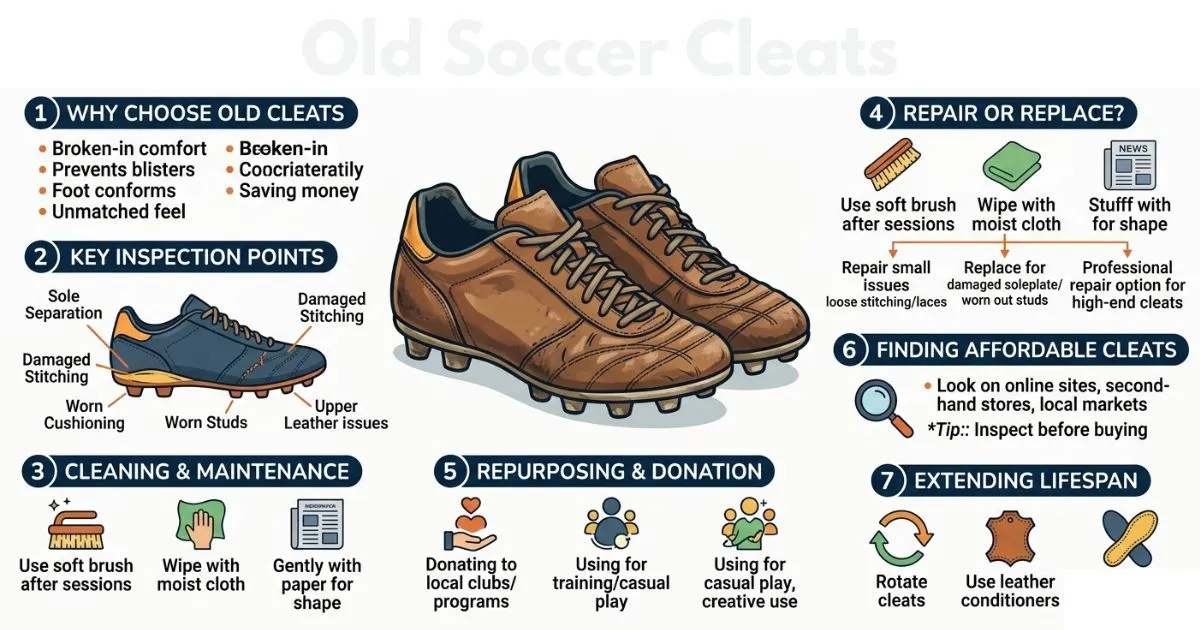
Players often don’t appreciate the use of old soccer cleats. The reality is that worn-out cleats often provide a broken-in sensation, which helps prevent blisters and pain. They conform to the foot’s shape over time, providing more ball control and stability. Besides, it will save money for younger players who tend to outgrow their shoes faster.
Older cleat designs are popular among some players. Older models tend to have iconic styles that can have different traction patterns and even leather types that are not readily available in newer models. If you’re someone who cherishes both style and history, then vintage soccer cleats might be a good option for you.
Understanding the Wear and Tear
Each soccer cleat wears out differently. The following parts of old soccer cleats should be checked: upper leather, soleplate, and studs. Running in worn studs can impact grip, which can make sprinting or turning more difficult. Likewise, it is also important to note that damaged leather can affect an individual’s ball control and foot support.
Need to inspect regularly. Check for sole separation, damaged stitching or worn cushioning. Keeping old football cleats will help to keep them in use and safe for game play.
Cleaning and Maintenance Tips
The simple, everyday routines will keep your old cleats in good condition. Use a soft brush to remove dirt and mud after each session. Use a moist cloth to clean the leather or synthetic upper. For harder stains, use gentle soap to clean without harming the fabric.
It is essential to dry as well. Do not place in direct sunlight or in front of heaters, as this can cause cracking of the leather and damage to the soles. Fill the cleats with newspaper or cloth to help keep them in shape. But with proper care and maintenance, your old soccer cleats can last you for many more games to come.
When to Repair vs. Replace
The issue of whether to repair or replace worn-out soccer cleats is a tricky one. Some small problems can be corrected, such as loose stitching or worn laces. If the soleplate has been damaged or the studs are worn out, it’s time to replace the soleplate. Timely change will help keep you on top of your game and help lower your chances of injury.
If a player pays for top-of-the-line cleats, they may be able to get the cleats professionally repaired. Sports shoe cobblers have the option to mend top-quality old cleats so that they remain match-fit for several seasons.
Repurposing Old Soccer Cleats
Old cleats don’t necessarily have to be thrown away. Soccer players donate old, used soccer cleats to local clubs and community programs. Others use them for casual play, training or for playing indoor soccer, where the durability of the studs is not as significant. Creative players even use cleats to adorn their belongings or to practice with.
This is not only good for the environment but also for young athletes who may not have access to new equipment. Turning old cleats into something new benefits everyone involved in performance, sustainability and community involvement.
Finding Affordable Old Soccer Cleats
Not all of you have brand new gear, and that is why the market for old soccer cleats flourishes. Look on online sites for cheap deals, second-hand sports stores and local markets. You may end up obtaining top-of-the-range brands at a budget-friendly price by purchasing older versions.
Inspect worn studs, sole integrity and fit when buying. Any flaws, no matter how minor, can affect performance, so it is important to closely examine the bicycles. A knowledgeable buyer can get a great deal on used cleats which work nearly the same as new cleats.
Balancing Comfort and Performance
When it comes to picking the finest old football cleats, comfort is the most vital factor to keep in mind. The shoe should be tight and have no pressure points. There is a potential for leather cleats to wear out over time, and synthetic cleats can stiffen over time and require additional maintenance. There’s no sacrifice of performance when the focus is on comfort; in fact, a good fit will enhance touch, control and agility.
Trying out various brands and models can help you determine the optimal comfort, durability, and performance in the field. Old cleats can be used for a professional level of play if they are in good condition and the right size.
Common Mistakes to Avoid
There are a few errors that can shorten the life of old football cleats. Studs wear out quickly on inappropriate surfaces such as concrete or asphalt. However, the material can also become damaged by not cleaning or storing it in a damp environment. Also, continuous use of the same pair without rotation results in faster wear.
Prevent these mistakes by playing with cleats in training and matches, keeping shoes clean and in a dry area. These easy steps help ensure your old cleats are reliable and safe.
Tips for Extending Lifespan
Here are some simple soccer information & tips to learn & extend the lifespan of worn-out soccer cleats. Change cleats from time to time during practice to avoid wearing them out unevenly. Use leather conditioners to maintain the softness of natural materials. Regularly replace insoles and laces as needed. The small actions have a significant effect on the functional life and comfort of the cleats.
It is also a proactive measure to uncover any small problems that might become significant. Old cleats can still be used, and many players find them to be a worthwhile investment as they help to improve their performance and reduce injury.
FAQ’s
Can old soccer cleats still improve performance?
Yes, old soccer cleats that are well-maintained can offer a broken-in feel and better ball control, sometimes outperforming new stiff cleats.
How often should I inspect my cleats?
After every few matches or training sessions. Check studs, soleplates, stitching, and overall wear to ensure safety and performance.
Can old cleats be used for different surfaces?
Yes, but avoid concrete or rough surfaces, which wear down studs quickly. Reserve old cleats for grass or turf as recommended.
Is it better to repair or replace old cleats?
Minor issues like laces or stitching can be repaired. Replace cleats when studs or soles are excessively worn or damaged.
Where can I buy affordable old soccer cleats?
Second-hand stores, online marketplaces, and local sports outlets often offer quality old cleats at reduced prices.
Conclusion
Old Soccer cleats are a valuable asset to any player, regardless of level of play. They are comfortable, affordable and have a distinctive taste of the past. However, older cleats can perform well with proper care and intelligent re-usage, and careful selection. Whether you’re a novice or a pro, you should know the possibilities of the old cleats, and you can increase your game and prolong the lifespan of your footwear.
With these tips, you can keep your old cleats in peak condition and save money while enjoying reliable performance on the pitch.