Introduction
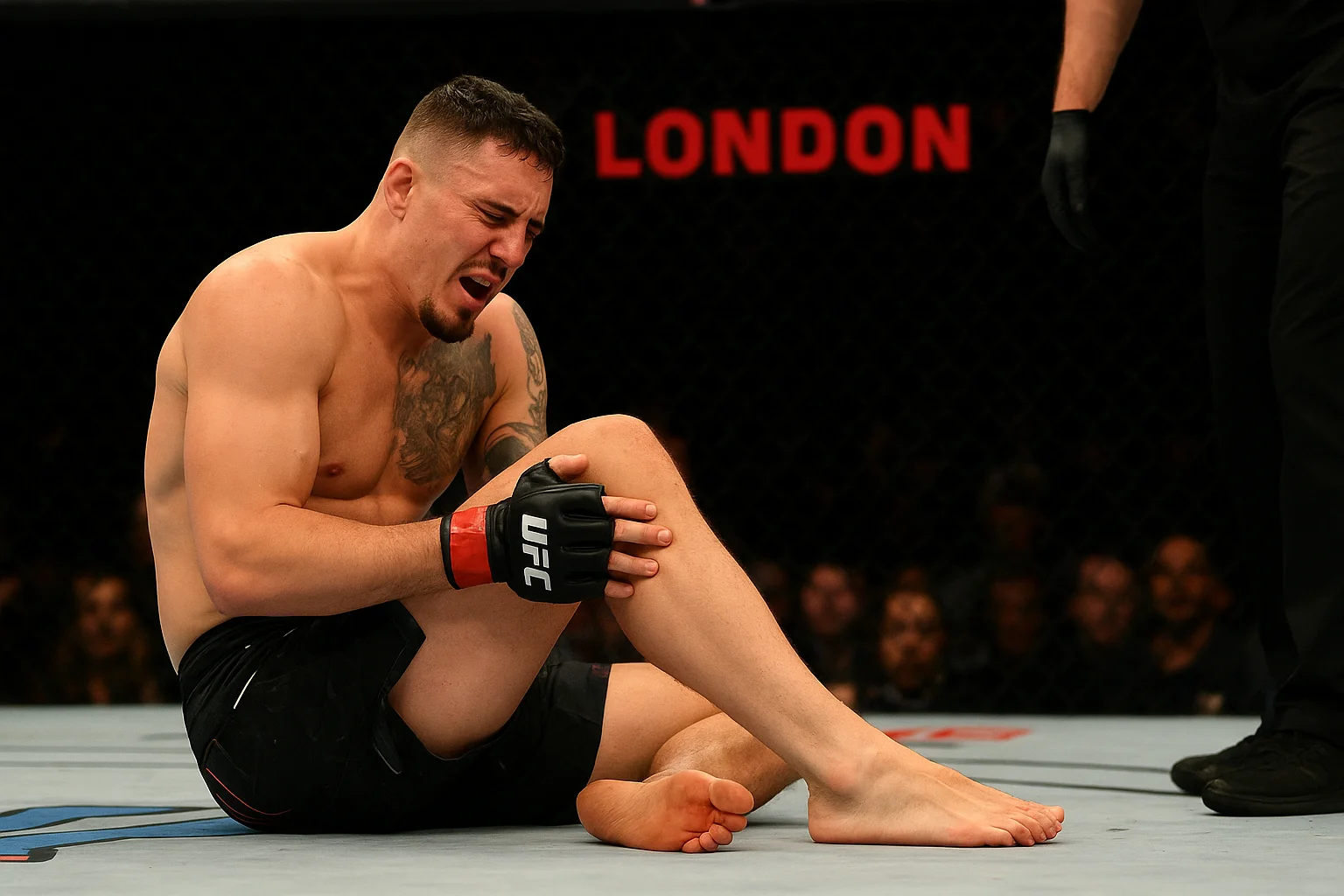
In July 2022, Tom Aspinall injury shocked the MMA community when the fighter sustained a devastating injury during a high-profile match with Curtis Blaydes at UFC Fight Night London. What seemed an ordinary leg kick turned out to be a serious injury and involved a torn MCL, damaged ACL, and a meniscus tear. As a fighter who had been quickly rising through the UFC heavyweight division, this injury was not only a physical blow–it brought into question his future in mixed martial arts.
Even prior to the injury, Aspinall had already made a name for himself as someone who could be reckoned with. Several punch-out wins and a developing reputation for technical skill had him widely regarded as one of the up-and-coming heavyweights in the sport. The fans, coaches, and analysts could not believe their eyes as the incident gave them a lesson that even the best of players are prone to a career-altering injury.
The story of Aspinall, despite the seriousness of the injury, is an illustration of the effectiveness of the process of recovery, the direct care of professionals, and psychological strength. His experience is a guide to athletes and other fans who may want to have an idea of how to rebound after a serious sports injury.
Key Takeaways
- Early Medical Treatment: Early assessment and intervention are essential to prevent further damage.
- Structured Rehabilitation: A step-by-step, closely monitored program enables safe, sustainable recovery.
- Mental Resilience: A critical element of recovery after an injury is managing the mental impact of the injury.
- Support Systems: Long-term success is dependent on trusted coaches, medical professionals, and family.
- New Medical Technologies: New surgical operations and treatment regimes can have a significant positive impact.
These are the main points that have to be made by athletes seeking to restore confidence and performance following an injury.
Tom Aspinall Injury
The Tom Aspinall injury was complicated and involved the MCL (medial collateral ligament), ACL (anterior cruciate ligament), and meniscus, which are essential to knee stability.
- The MCL keeps the inner knee straight by preventing it from bending inward.
- The ACL inhibits anterior translation of the tibia, which is essential during explosive mechanics such as kicking and pivoting.
- The meniscus provides a cushion between the shin bones and the thigh bone and thereby decreases the amount of stress that is placed on the joint.
Injuries such as this are not uncommon in combat sports. Fighters can endure comparable trauma due to the high impact of a strike, an ungraceful landing, or rotational movement. But in case of damage to more than one structure, like in the case of Aspinall, it needs special surgical treatment and a carefully structured rehabilitation scheme.
These details provide readers with an idea of what it means to recover and how a systematized approach is highly necessary.
Tom Aspinall Fight Status: What Happened After the Injury
After the injury of Tom Aspinall, his fight status was in question. The UFC was forced to postpone his fight against Curtis Blaydes, and fans and press are wondering what has happened to him. The social media was full of speculation, skepticism, and encouragement messages as people showed keen interest in his career.
The injury also contained practical consequences: training schedules, fight preparations, and sponsorship deals were not followed as before. Coaches and trainers stressed the value of restoring health in the athlete gradually rather than trying to get them into action too soon,as far more of the consequences of their actions are long-term results. Aspinall survived with his physical integrity intact and his professional reputation intact because he prioritized safety and orderly development.
Tom Aspinall Recovery News: Surgery and Medical Intervention
Tom Aspinall was treated by primary surgery on his knee, done by the top orthopedic surgeons who specialize in sports-related injuries. The procedure entailed the surgery.
- The ACL reconstruction.
- Treating the meniscus to get cushioning and flexibility of the joint.
- Lateral knee movement is stabilized with the MCL.
After the surgery, he underwent an intensive rehabilitation regimen, which was marked with milestones under the watch of medical experts. His progress was presented in the form of updates about his recovery that were made public, including the improvement of the range of motion and the gradual resumption of training at low intensity. These were important updates in engaging fans as well as showing how serious their recovery process is.
The Physical Rehabilitation Step by Step
Tom Aspinall injury recovery took a multi-phased approach to rehabilitation:
Phase 1: Acute Phase (0 4 weeks)
- Focuses on lessening pain and swelling via.
- Ice therapy (15-20 minutes, several times a day).
- Compression sleeves, Commentary bands.
- Increase in the injured leg.
This stage makes the damaged tissues stabilize without incurring further stress and forms the basis of recovery.
Phase 2 Early Rehabilitation (4-8 weeks)
Introduces easy movement exercises to recover the range of motion, which include:
- Heel slips and knee flexions.
- Straight-leg raises work the muscles without overloading the ligaments
- Low-impact stretches.
Such exercises will reduce muscle atrophy and increase circulation.
Phase 3: Stabilisation Phase (8-16 weeks)
One-minded on re-strength:
- Quadriceps and Hamstring resistance exercises.
- Biking and swimming are low-impact exercises.
- Train balance on: BOSU ball; stability board.
This stage makes the knee stable enough to go through dynamic movements, which are a requirement in MMA.
Stage 4 Functional Training (16-24 weeks)
Re-introduces movement patterns training:
- Controlled kick drills.
- Agility patterns of footwork.
- Light grapple and clinch training.
The aim is to emulate fight conditions and observe the response of the knee.
Phase 5: Return to Sport (24+ weeks)
Full incorporation into high-intensity training:
- Controlled sparring in complete contact.
- Explosive drills such as plyometrics.
- Increase in conditioning to fight slowly.
This slow re-entry makes sure that one is ready physically and psychologically to fight competitions.
Mental Recovery: Psychological Challenges: How to Overcome Them
The mental impact of the Tom Aspinall injury was great. The problem is common among sportsmen.
- Worry of re-injury.
- The fear of not performing well.
- Difficulty because of a lack of mobility.
Aspinall addressed these issues by trying to:
- Visualization: to train movements without risks.
- Setting a goal to show incremental progress.
- Coach and mental health support.
As other fighters who came back after similar injuries, such as Chris Weidman and Rose Namajunas, show, mental strength can be just as important to healing as physical recovery. Being able to remain focused and optimistic, Aspinall developed mental fortitude, which is essential in high-performance competition.
Lifestyle and Dietary Habits to speed up the healing
The correct nutrition and lifestyle are the main factors of recovery after Tom Aspinall injury. The major strategies are:
- Tissue repair foods (high protein, lean proteins, eggs, legumes).
- Inflammatory foods (alcohol, white flour, processed meats).
- Fluid and electrolyte status.
- Enough rest (7-9 hours) to regenerate the tissues.
- Meditation and light yoga are methods of dealing with stress.
All these are in addition to physical therapy, which hastens the healing process and enhances performance.
Tom Aspinall Next Fight: Pace Training
Training to fight next demanded some order:
- Strength Rebuilding: Core and lower body workout to safeguard the knee.
- Heart Conditioning: Sports such as rowing and swimming are low-impact exercises.
- Technical Skills: Incremental reintroduction of striking, grappling, and clinch drills.
- Controlled sparring: slowly raising the intensity to determine readiness.
Analysts are anticipating that Aspinall will be competitive in his next performance, and these measures will help him come back in shape, at the right condition, and without any injury.
Successes and Lessons
- The incident involving Tom Aspinall injury can be discussed as an inspirational case study.
- It is important to treat an infant early and by specialists with the help of surgery.
- Limited risk of re-injury is achieved through phased rehabilitation.
- Mental strength and social support increase the pace.
Aspinall is not the only fighter with such a path to success, as it is similar to the story of such fighters as Jorge Masvidal and Dominick Reyes, who were able to turn setbacks into growth opportunities.
Training to Fight Later
To remain at optimal performance after recovery:
- Strength and conditioning programs on a regular basis for injury prevention.
- Frequent medical care of joint health
- Opponent-specific training with analytics and fight breakdowns.
These tactics will provide long-term stability and sustainability in the UFC heavyweight division.
Conclusion
The Tom Aspinall injury was a major incident in his career, but his healing process is one that shows resilience, professionalism, and determination. With surgical treatment, systematic rehabilitation, psychological strength, and lifestyle discipline, Aspinall emerged into the octagon better than before. It is a blueprint to all sportspeople across the world, proving that the end is not a setback but the beginning of a better comeback.
FAQs
What occurred to Tom Aspinall when he was injured?
The Tom Aspinall injury was incurred when fighting Curtis Blaydes, where an MCL was torn, the ACL was damaged, and the meniscus was torn in his knee. These are critical to the stability, movement, and shock absorption in the knee, so this is a severe injury to a heavyweight MMA fighter. It was a severe injury that necessitated emergency surgery and a progressive rehabilitation regimen to regain strength, mobility, and functionality.
How long did Tom Aspinall take to recover?
The Tom Aspinall injury recovery was done on a 6-8 months multi-phase rehabilitation program. The stages were:
- The acute (0-4 weeks) phase of management of swelling and pain.
- Gentle movement as early as 4 weeks to 8 weeks.
- Strength phase (816 weeks) to reinforce the mass around the knee.
- Functional training (16-24 weeks) to reinstate fight-specific movements.
- Resume sport (24+ weeks), complete contact and sparring.
This timescale allowed a safe and progressive re-entry into the competition with a minimum risk of re-injury.
What are some of the most essential steps in Tom Aspinall’s rehabilitation?
The Tom Aspinall injury rehabilitation is gradual:
- Use ice therapy, compression, and elevation to reduce swelling and pain.
- Gently move the joints with range-of-motion exercises.
- Rebuild quadriceps, hamstrings, and core.
- Revive functional, fight-specific drills in order to get back to agility and stability.
- Return to full-contact sparring under professional oversight, gradually.
This strategy provides balance between physical recovery and the rigours of professional MMA fighting.
What steps did Tom Aspinall take to stay mentally strong in recovery?
Injuries such as this may cause a major psychological effect, such as fear, anxiety, and frustration. Aspinall drew:
- Setting goals to monitor progress.
- Visualization practices to exercise safe movement.
- Family support, support of coaches, and mental health professionals.
- He became more mentally tough by remaining focused and resilient, a very important aspect of a healthy mind in the world of elite sports.
So what nutritional strategies aided Tom Aspinall in slowing down the process of recovery?
Correct nutrition was a critical part of Tom Aspinall injury recovery. Important strategies were:
- Foods that are high in protein (lean meats, eggs, legumes) are used to repair tissues.
- Inflammatory foods (refined grains, sugar-sweetened products, red meat).
- Hydration and electrolyte regulation to assist in cellular repair.
- Stress management and sufficient sleep to allow maximal recovery.
These practices improved the rate of tissue regeneration, the immune system, and general athletic performance.